.png)
What Is an Electronic Health Record? A Practical Guide for Social Care Teams

Paper records slow your team down and scatter vital care information across multiple files and systems. This makes it hard to keep care plans, medication updates, and monitoring aligned throughout the day. An electronic health record gives your team one secure place to record, view, and act on person-centred care information without adding to admin tasks. In this guide, you’ll see how digital social care records simplify daily care management and improve visibility in real time. For more insights, you can explore this comprehensive guide on electronic health records.
Understanding Electronic Health Records
Electronic health records (EHR) provide a streamlined way to manage care information. They help eliminate the need for paper files by offering a single, secure place for all data.
Definition and Key Features
An EHR is a digital version of a patient's paper chart, designed to be accessed in real time. It includes everything from medical history to doctor's notes and test results. With EHRs, you can easily update records, share information securely, and ensure that care is coordinated across multiple providers. These features make it an integral tool in modern social care settings, improving both access and accuracy.
Benefits for Social Care Teams
EHRs bring numerous advantages to social care teams. They reduce paperwork, freeing up time for more direct care. With digital records, there's less risk of losing important information, and data is more secure. Teams can access the most current patient information at any time, which helps in making informed decisions quickly. This improved access supports better compliance with regulations and enhances the quality of care provided.
Practical Impact of EHR on Daily Care
Switching from paper to digital records can transform the daily operations of care teams, making processes more efficient and less error-prone.
Before and After: Paper vs. Digital
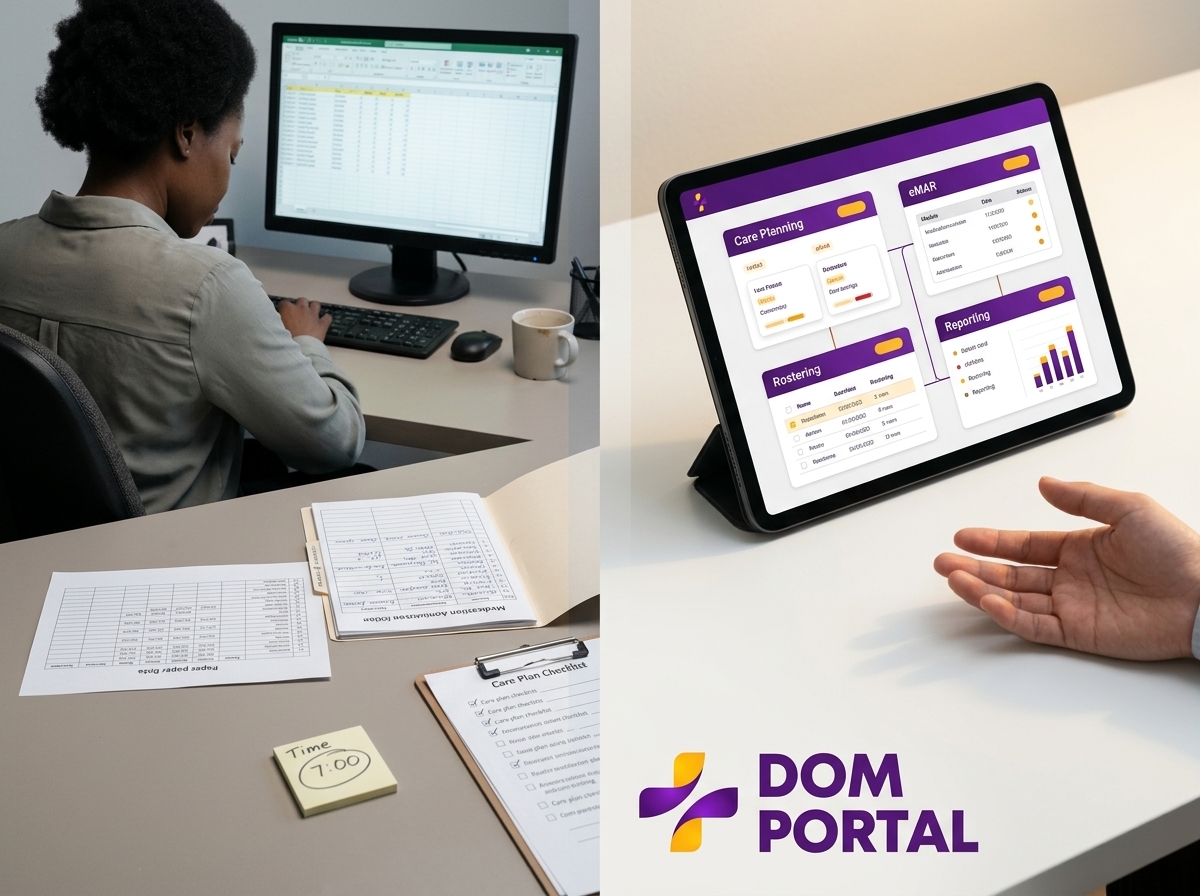
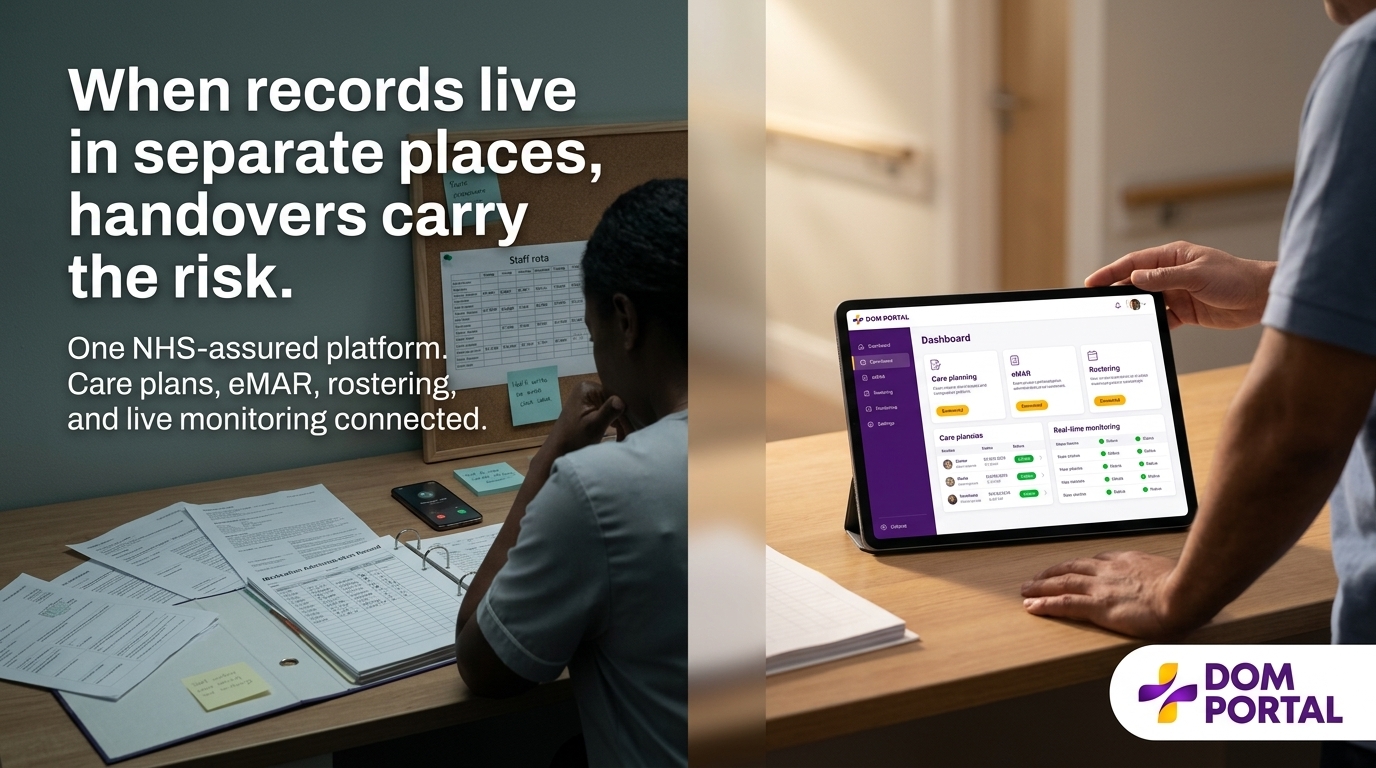
Think about how paper records slow down care provision. Staff often spend significant time locating files and updating information manually. With digital records, this time-consuming process becomes faster and more reliable. Everything is stored in one place, easily accessible, and updates can be made instantly. This transition means fewer administrative burdens and more time for interacting with clients.
Enhancing Compliance and Visibility
EHRs bolster compliance by maintaining accurate and complete records effortlessly. They offer real-time visibility into a patient's care plan, ensuring that every team member is on the same page. This transparency not only supports compliance with regulations but also improves care outcomes by providing a complete view of the patient's needs. Real-time updates mean the team can respond swiftly to any changes in the patient's condition. For further reading, you can check the article on enhancing compliance with electronic health records.
Choosing the Right EHR Solution
Selecting the best EHR system for your social care needs is crucial for maximizing these benefits.
Key Factors for Social Care Providers
When choosing an EHR, consider factors such as ease of use, integration capabilities, and support for compliance needs like CQC and GDPR. The system should be user-friendly, allowing all team members to adopt it without extensive training quickly. Look for systems that offer comprehensive features, including electronic medication administration records (eMAR) and care rostering capabilities. A good EHR should also facilitate better family communication through a portal that keeps them informed and involved.
Dom Portal: A Comprehensive Care Solution
Dom Portal stands out as a comprehensive solution for social care providers. It offers an NHS-assured platform for Digital Social Care Records (DSCR), ensuring your data meets high standards of compliance and security. Features like real-time monitoring, rostering, and eMAR simplify care management, reducing admin while boosting efficiency. With Dom Portal, you're not just adopting an EHR; you're embracing a complete care management system. Discover more about transitioning to digital care by reading our article on Electronic Care Records: From Paper Backlogs to Real-Time, Person-Centred Care.
Frequently Asked Questions
What is an electronic health record?
An electronic health record (EHR) is a digital version of a patient's medical history, designed for secure and real-time access by authorized users. It includes data like medical history, diagnoses, medications, treatment plans, and test results.
How do EHRs benefit social care teams?
EHRs streamline documentation, reduce paperwork, and improve access to patient information, allowing teams to provide better-coordinated care. They also support compliance by maintaining accurate and comprehensive records.
What should social care providers look for in an EHR?
Consider ease of use, integration capabilities, compliance with standards like CQC and GDPR, and features such as eMAR and care rostering. The EHR should also support family communication through easy access to care updates.
How does Dom Portal enhance care delivery?
Dom Portal offers a comprehensive digital solution, integrating features like real-time monitoring, rostering, and eMAR to improve care management. Its NHS-assured platform ensures high compliance and security standards.
Is transitioning to an EHR system complicated?
Transitioning to an EHR can be straightforward with the right support. Providers like Dom Portal offer comprehensive onboarding and support to ensure a smooth transition from paper to digital records.
Comments